Freemarking Flowerhorn


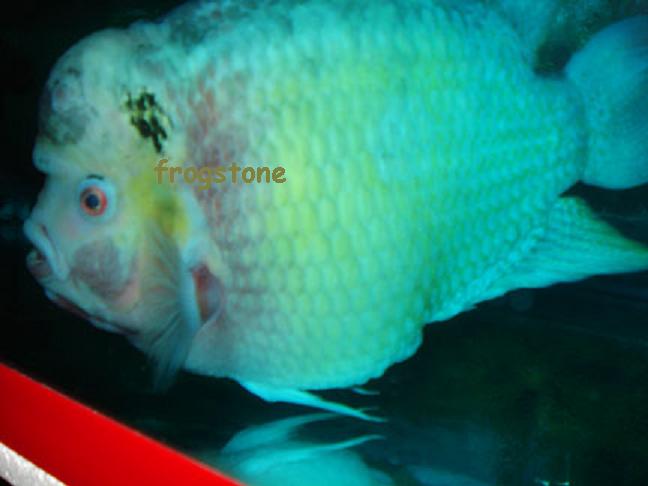
White Spot Disease
The cause of this condition is Ichthyophithirius multifilis (ICH ) , a ciliated protozoan . Bad water quality can increase the likelihood that your fish will be victim to this parasite.Low water temperatures (< 25°C) are ideal breeding grounds for ICH.The most common way Flower horns get ICH is when they are fed live or frozen food that has already been contaminated with the parasite.
The most prominent symptom of this condition are the pure white spots that will appear all over your fish. You may also notice the fins are clumped together, and they act a bit more lethargic than usual. Moreover, it’s common for them to lose interest in food when ICH infects.
The parasites resides under the skin of the fish, hence it is not affected by water treatment or direct treatment applied to the fish . Break the breeding cycle of Ich by washing the tank thoroughly to remove the cysts of the parasite. Keep in mind that this is a highly contagious condition, so your entire aquarium must be treated.
To cure white spots just place Kordon Ich inhibitor in your tank.Add aquarium salt at 3g/l of water every 3 days together with the medication.After 3rd day, tank must be washed thoroughly to eliminate the causative agent.

Everything outside the required environmental- or behavioral needs of your fish causes stress. Stress greatly affects the health, reduces the life span, and and closer your fish to vulnerability for diseases. Stress is also the main cause of a deteriorating slime coat that protects the fish. This slime coat is the defense system toward infections. Fish can adapt to slightly different conditions in their environment. Understanding the factors that contribute to stress, will eliminate or reduce unnecessary risks. Stability in the water column and a balanced environment are as important as eliminating some other potential stress causing factors.
This are the main factors of fish stress:
TANK MATES - Compatibility is the key. Aggressive fish chasing others, naturally or as part of a mating ritual or territorial defense. Smaller species without adequate hiding places feel unsafe among bigger fish. Some species require larger groups (schooling); others are best kept individually as some tend to get aggressive towards their own. Fish communication (body language/ behavior) also might not be recognized by other species, again potentially leading to aggressive behavior. Stress also occurs when feeding if the fish have to compete for food. Needless to say they will always compete. The thing to remember is to distribute the food evenly throughout the water surface. Avoid spot feeding.
TANK SIZE - Does overpopulation trigger a thought? The rule of thumb is about 1 inch of fish per 2 Gallons of water. This guideline should only be used in order to get a sense of the limitations of your tank. However, some species can be kept in a 10-Gallon tank, others need more physical space. Territorial fish require a larger tank as they chase intruders out of their claimed territory.
WATER TEMPERATURE - An often overlooked topic. Fluctuations of temperature should be moderate and controlled at all times. The optimum temperature varies from fish to fish, but too cold or to warm will cause stress. Keep in mind that a tank in direct sunlight will heat up during the day. The water temperature may also rise during the light-on period. This can be more of a concern with smaller tanks. Water changes cause stress as well. It is important to replace the water with fresh water, which is about the same temperature as the tank. Further, the cleaning and removal process disturbs fish. Considering this, it ads validity to the discussion about proper water changes = change less water more frequently.
WATER PARAMETERS - Poor water quality is the most significant cause for stress. Fish can survive sub-optimal conditions if not too far out of range. But sudden changes within the water chemistry will cause severe stress. Adjustments in pH, salinity, or water hardness should be made gradually. Ammonia and nitrite are extremely stressful and can be detrimental if high levels persist.
OTHER FACTORS:
Stress is also induced by insufficient oxygen levels (fish gasping for air), old fish food, and an unbalanced diet.
Fish are not good travelers, even on short distances. Good care should be taken during the acclimation process.


